
Let’s talk about chocolate.
Not to tell you that you can’t have it. You can. But managing diabetes successfully means having a strategy for the foods you love—not eliminating them. And chocolate is one of those foods that actually has some real benefits when you approach it the right way.
There’s a reason your kid’s baseball coach recommends chocolate milk after practice. Cacao—the raw ingredient at the heart of all chocolate—contains compounds with genuine anti-inflammatory properties. And that matters, because all chronic disease is rooted in the inflammatory process. So the question isn’t whether chocolate has a place in your life with diabetes. It’s how to make it work for you instead of against you.
Milk Chocolate vs. Dark Chocolate: A Side-by-Side Breakdown
To make this concrete, I went to the grocery store and pulled two bars of the same brand—one milk chocolate (33% cacao) and one dark chocolate (72% cacao). Same brand, same serving size: one-third of the bar, or 30 grams. Here’s what the nutrition labels tell us.
Milk Chocolate (33% Cacao)
In milk chocolate, most of the original cacao has been cut out and replaced with cream, sugar, and other additives. The nutrition label for one serving reflects that:
- 160 calories
- 10 grams of fat
- 18 grams of carbohydrate
- Less than 1 gram of fiber
- 2 grams of protein
With 18 grams of carbohydrate and virtually no protein or fiber to slow things down, you’d expect to see a somewhat delayed but reasonably high blood sugar spike on your CGM. That’s the sugar and cream doing exactly what they do—delivering a carb load with nothing to buffer it.
Dark Chocolate (72% Cacao)
Now look at what happens when 72% of the original natural cacao is preserved. Same brand, same serving size:
- 150 calories (10 fewer than milk chocolate)
- 13 grams of fat (3 more — and fat slows carb absorption)
- 13 grams of carbohydrate (5 fewer than milk chocolate)
- 3 grams of fiber (bringing net carbs down to just 10 grams)
- 2 grams of protein
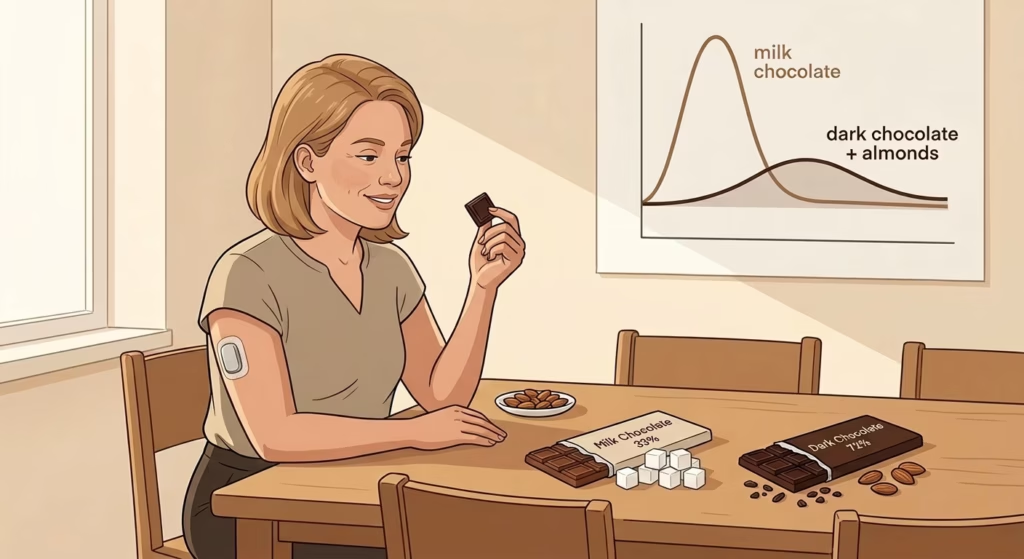
That’s a meaningful shift. Fewer carbohydrates, more fat, and actual fiber—all of which work together to slow down the rate at which glucose enters your bloodstream. You’ll still see a curve on your CGM (there are still 10 grams of net carbs), but it’s going to be a gentler, slower rise with a better correction at the end. Rolling hills, not a roller coaster.
The more original cacao that’s preserved in the product, the more anti-inflammatory benefit you get—and the less sugar you’re absorbing.
The CGM Experiment: Try It Yourself
If you wear a continuous glucose monitor, this is a great experiment to run. On one day, have one serving of milk chocolate and watch what happens to your curve. The next day, have the same serving size of dark chocolate (72% or higher) and compare.
You may be genuinely surprised by the difference. The milk chocolate will likely produce a sharper, more sustained spike. The dark chocolate will likely show a smaller, slower rise that your body corrects more efficiently. Same treat, same portion—completely different metabolic response.
Bonus Points: The Chocolate + Almonds Strategy
Want to flatten that curve even more? Pair your dark chocolate with a small handful of almonds or a similar nut.
Here’s why this works: the almonds bring additional protein, additional fiber, and additional healthy fat to the snack. All three of those macronutrients slow carbohydrate absorption further. So while you’re enjoying your chocolate, your body is processing the glucose at an even more gradual pace—keeping that CGM curve as flat as possible.
This is the “never eat naked carbs” principle in action: always pair your carbohydrates with fat, fiber, or protein. A square of dark chocolate by itself is already better than milk chocolate. A square of dark chocolate with a handful of almonds? That’s a strategic treat!
The Satisfaction Factor
There’s one more thing that works in dark chocolate’s favor, and it has nothing to do with the nutrition label.
The higher the cacao percentage, the more stimulating and robust the flavor. Dark chocolate is richer, more complex, and more satisfying per bite. Many people find that a smaller amount of high-quality dark chocolate makes them happier than the same amount of milk chocolate—and they actually want less of it.
That’s a metabolic win and a psychological win at the same time. You’re eating fewer carbs, absorbing them more slowly, getting anti-inflammatory benefits from the cacao, and feeling more satisfied with a smaller portion. That’s not deprivation. That’s strategy.
Diabetes management isn’t about eliminating the foods you love. It’s about having a plan for how to enjoy them.
Your Chocolate Strategy at a Glance
- Choose dark chocolate with 70% cacao or higher — the more cacao, the more benefit and less sugar
- Stick to one serving — about one-third of a standard bar, or roughly 30 grams
- Pair it with almonds or another nut — the extra protein, fat, and fiber slow glucose absorption further
- Have it after a meal when possible — never on an empty stomach, where the carbs hit hardest
- Run the CGM experiment — compare milk vs. dark on your own data and see the difference for yourself
- Let satisfaction work for you — higher cacao means more flavor per bite, which often means you want less
Ready for Comprehensive, Root-Cause Care?
Now seeing patients in 7 states via telehealth: TX | CA | CO | OR | WA | OK | NM
Get your consultation in weeks—not 6 or 12 months.
469-THYROID (469-849-7643) | 817-380-4880
aidendo.com