
I have said the same sentence in exam rooms for years: Let’s find out what you are made of.
In July I finally ran the test on myself.
I want to be honest about why I am publishing what came back, because it is not flattering and it is not a success story yet. It is a starting point.
What did my own body composition test actually show?
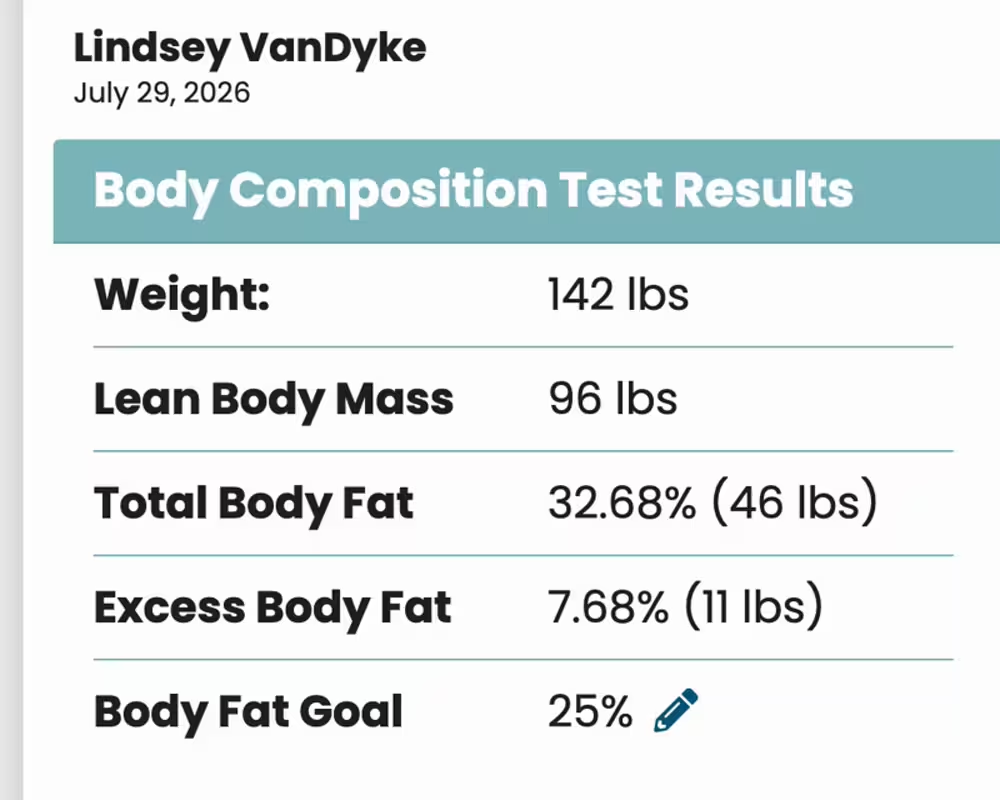
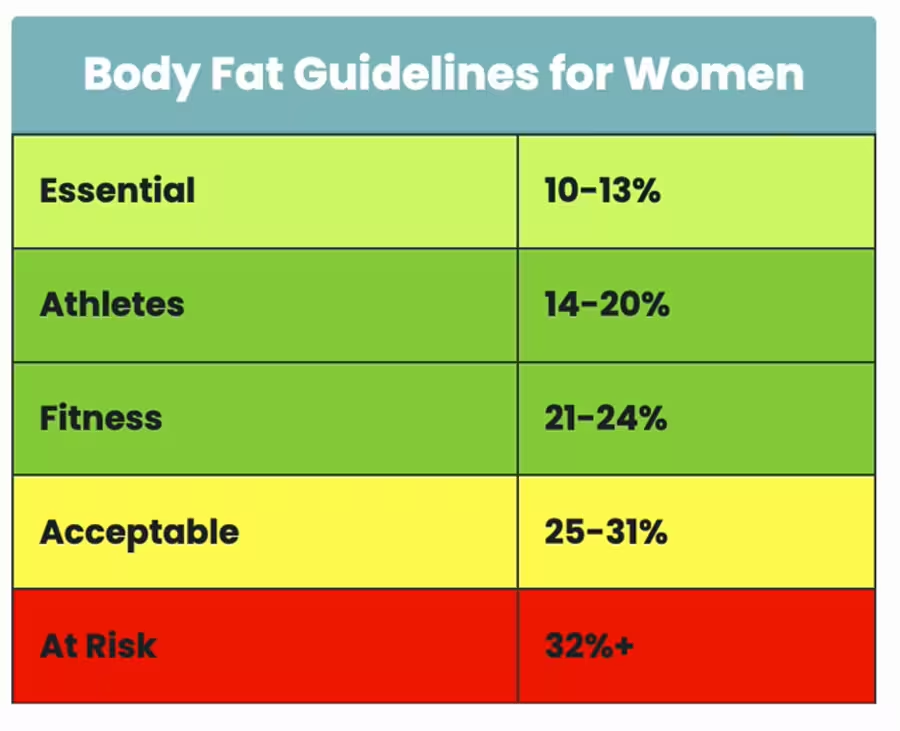
My weight was 142 pounds. My lean body mass, 96 pounds. My total body fat, 46 pounds, which is 32.68 percent. On the reference chart for women, anything at 32 percent and above is the at-risk category. So I am in it.
I had expected it to be fine. I have casually followed my body composition for years. I prioritise protein. I lift. I have not done anything reckless.
It is higher than I ever imagined. It is honestly higher than it looks on me, and that is the part I want you to sit with, because it is the reason we check these metrics in the first place. You cannot assess this by eye. Not on yourself, and not on anyone else.
Then I did the part anyone can do at home with a tape measure. My waist is 30 inches. My hips are 38 inches. That puts my waist-to-hip ratio at 0.82, which is a moderately risky ratio for a range of metabolic problems.
Almost 8 percent of my body fat is excess. I am carrying 11 pounds that need to come down.
What the chart told me that the number did not
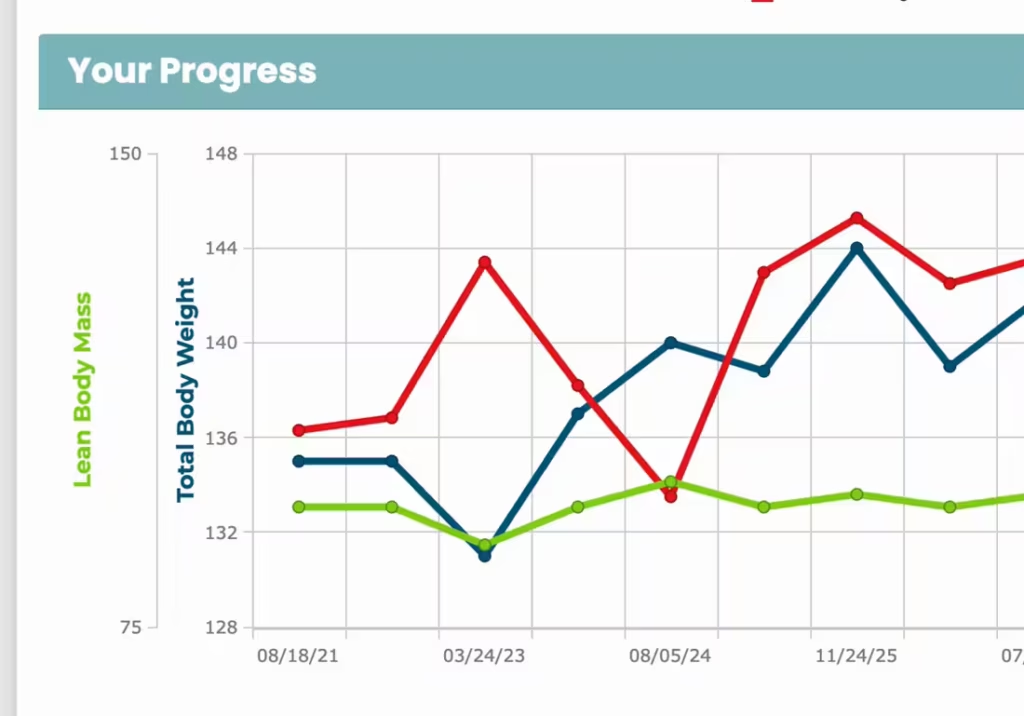
My scan history goes back to August 2021 and it plots three lines. Green is lean mass. Red is fat mass. Blue is total weight.
Here is what I want you to notice, and it is the argument I make to patients every week, drawn this time on a chart with my own name on it. Small changes in the green line produce enormous changes in the red line. They move against each other.
My lean mass actually went up two pounds. My weight went up seven. If I had only been watching the scale I would have read that as one bad number, and I would have missed that the thing I most wanted to protect was holding.
But the trend underneath is not good. Going back to August 2021, I have had an overall uptrend of fat mass all the way to now. And there is one point on that chart I keep looking at.
What one herniated disc cost me
August 2024 was my best muscle mass and my lowest fat mass. I remember looking and feeling pretty good about myself at that point.
In September 2024 I herniated a disc in my lumbar spine.
I have spent every month since then trying to come back from it. I had surgery a little over a year ago and it was fixed, but rehab is a long process, and I have never really recovered my lean mass.
I am telling you this because it is the most ordinary story in medicine. Not a failure of willpower. Not a lack of information. An injury, an operation, a long recovery, and a schedule with no room in it. Two years later, the numbers have quietly moved.
I have also passed the 45 mark, and age is everybody’s biggest risk factor. Weight is complicated because there is no smart bullet. People do not respond the same way to the same intervention, and the metabolic playing field is never constant. It shifts under your feet, which means you have to be adaptable.
I am at the point in my life where I need to adapt.
How do you build a plan from those numbers?
This is exactly what I would do for you in a consultation.
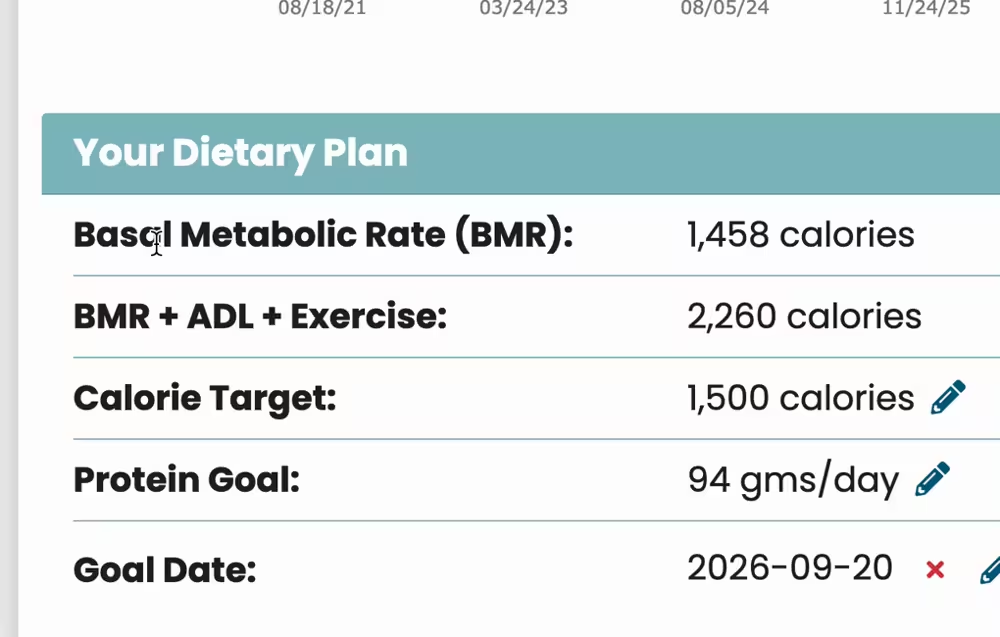
My basal metabolic rate is 1,458 calories. That is what it costs to run my body doing nothing at all. Add the exercise I am actually getting, three to five days a week at moderate intensity, and I am spending around 2,260 calories a day. From that, my calorie target is 1,500 a day.
My protein goal is 94 grams a day, and this is the number most people get wrong. I do not calculate protein from body weight, because body weight includes the fat you are trying to lose. I calculate it from lean mass, at about one gram per pound, for anyone without kidney disease. My lean mass is 96 pounds. So, 94 grams.
I will be honest with you. That is hard to hit.
My goal is 25 percent body fat, chosen deliberately because it puts me at the very bottom of the acceptable range, almost into the fitness range. If I am compliant, the plan estimates I get there by 20 September. That’s not far away!
What am I actually changing?
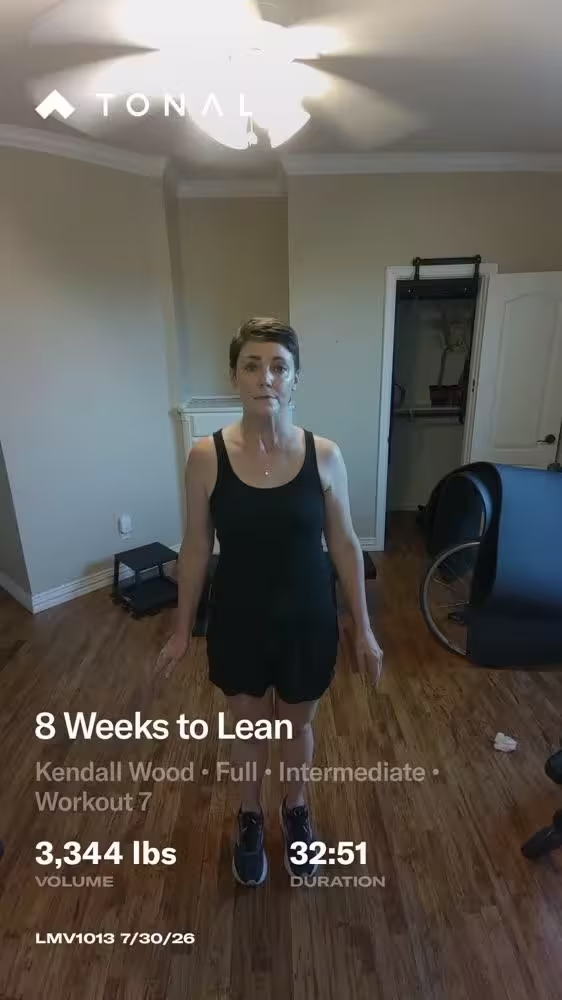
The training. Eight weeks, four sessions a week, strength prioritised. Not a comfortable set of fifteen reps. When I talk about strength training in the context of weight loss, I mean challenging the muscle to the point of exhaustion, where you need someone to help you finish that rep, because that is what creates the demand to build more fibres and bigger ones.
For most patients the floor is two to three times a week. And if you are working around an injury the way I am, that is exactly when you want a physical therapist or a trainer organising it and keeping you safe.
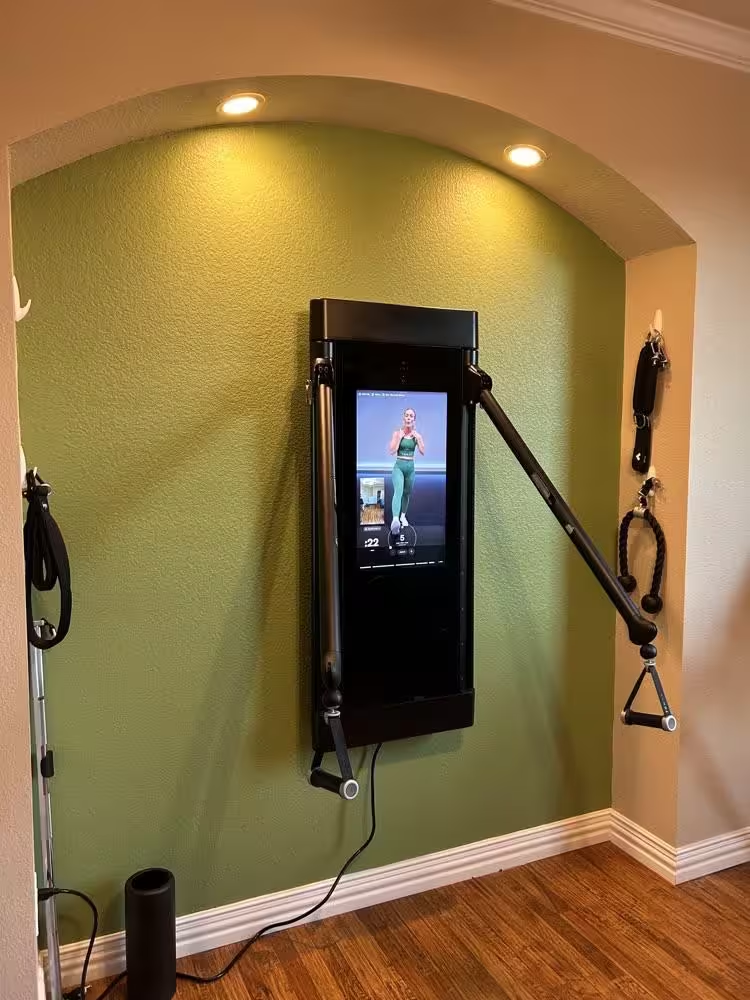
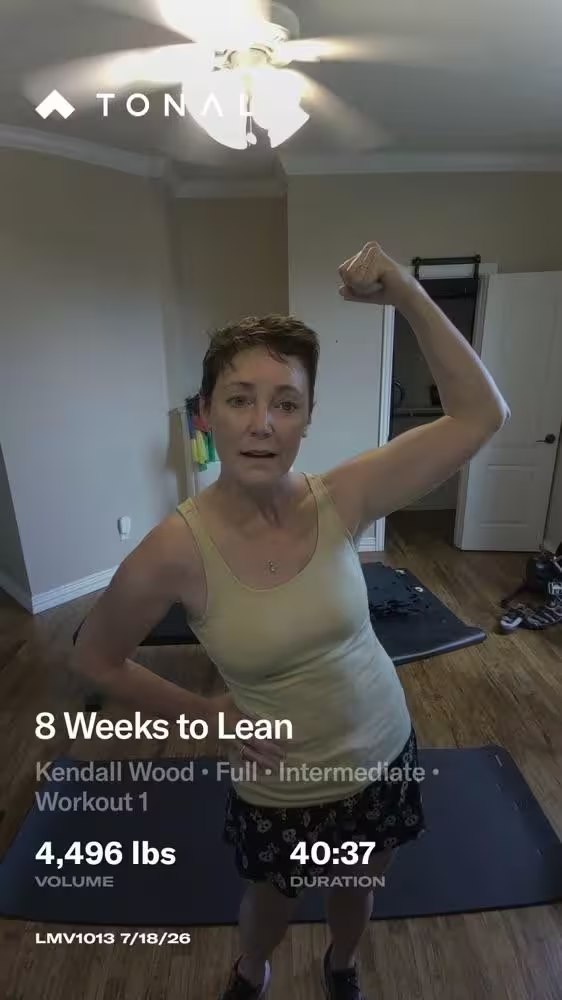
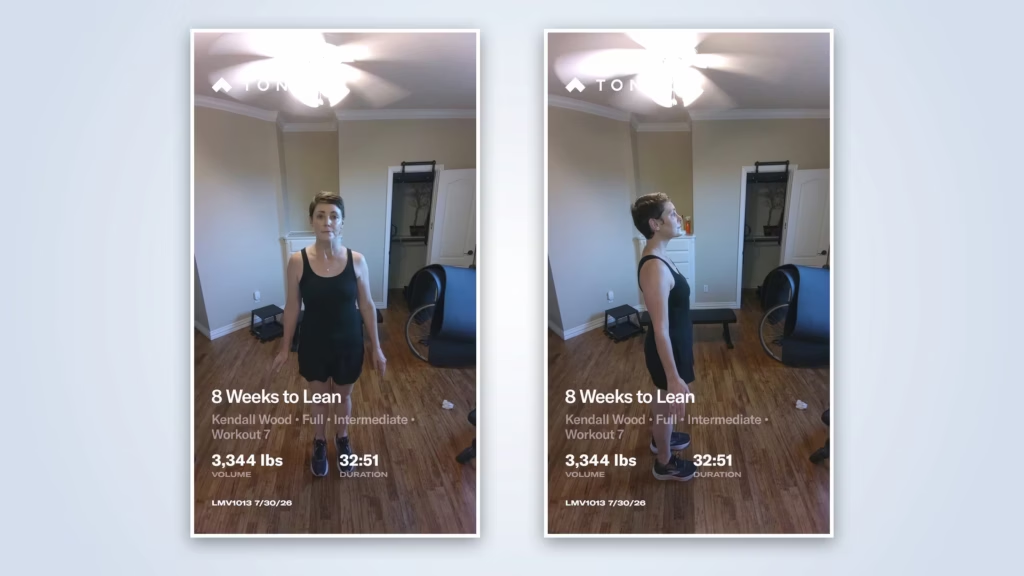
The photographs below are the same spot and the same light, every week. That is the record, and it is more useful than anything the scale will tell me over eight weeks.
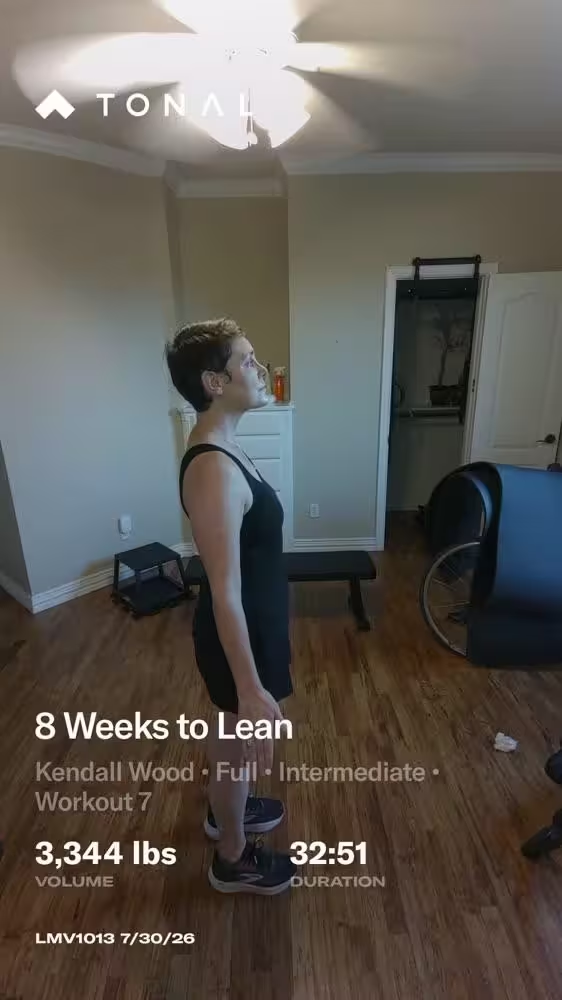
The food. I am doing my own shopping and my own cooking, so I can swap the things that matter.
I love a good turkey sandwich, but mayonnaise is a problem. So I switch it for a savoury avocado spread. More fiber. Bad fats become good fats, and it brings down the calorie load of the whole meal. Same sandwich.
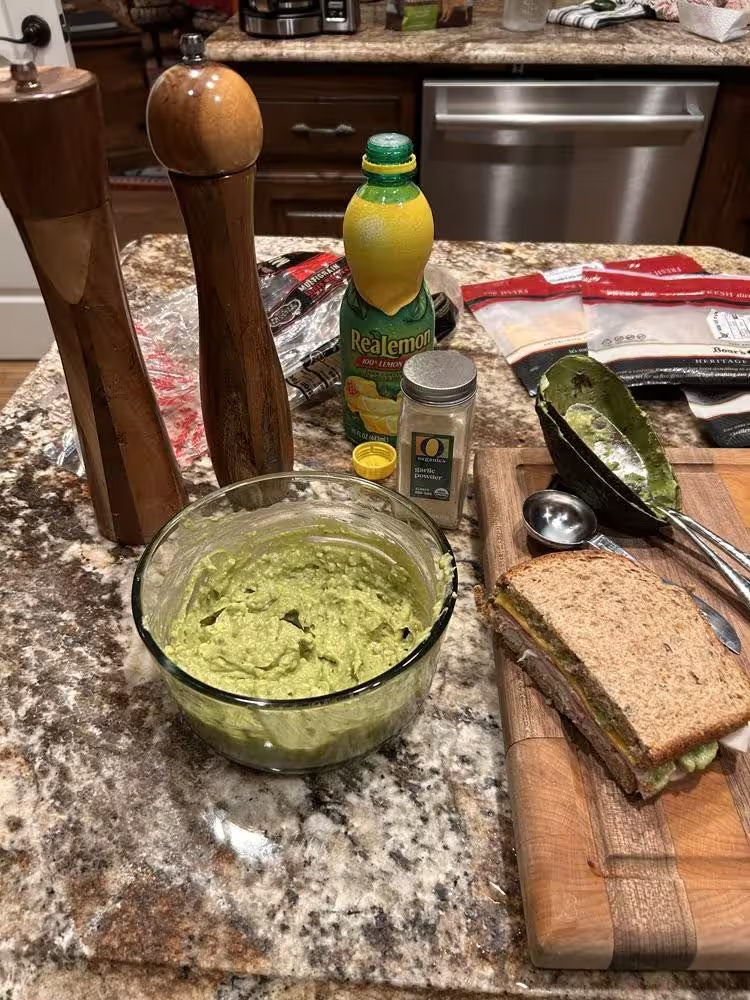
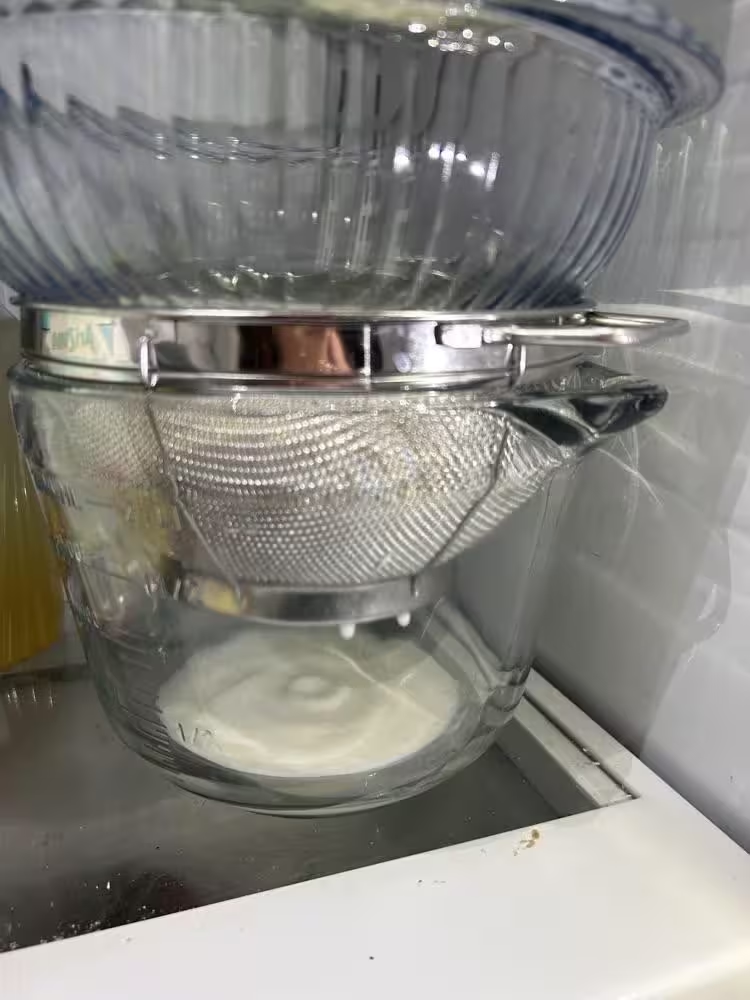
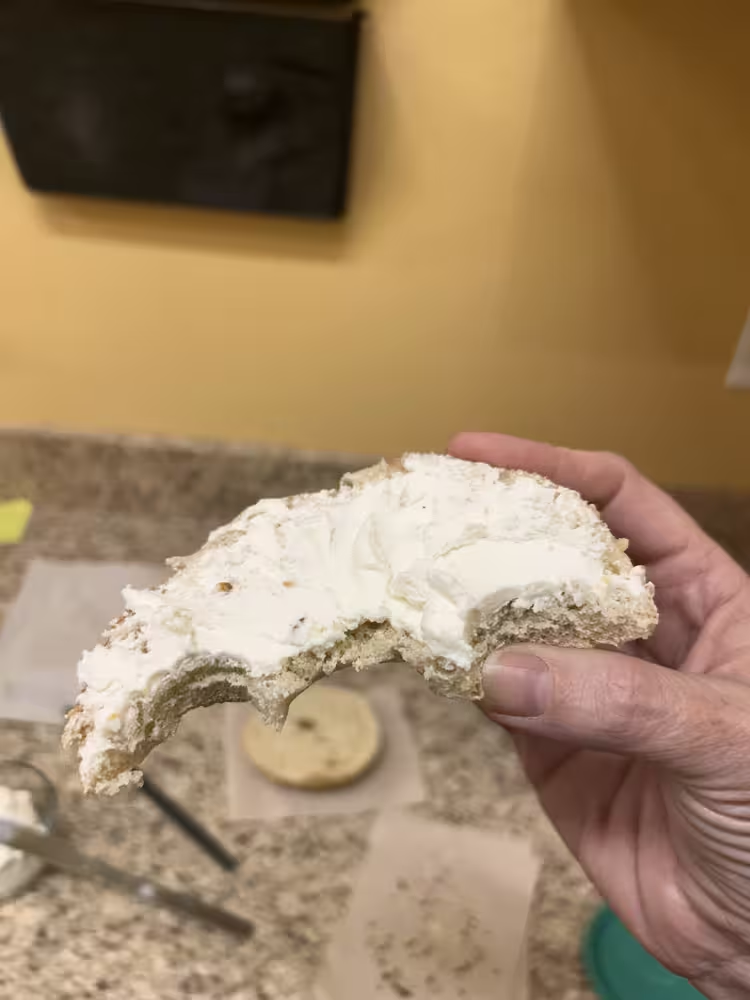
I have been doing the same with other staples. I make my own spreadable cheese from plain Greek yogurt, lemon juice and salt. Two cups of yogurt, one tablespoon of lemon juice, one teaspoon of salt. Mix it, pour it into a sieve lined with cheesecloth, tie it tight, set it over a bowl in the fridge, and weigh it down if you want to help the liquid out.
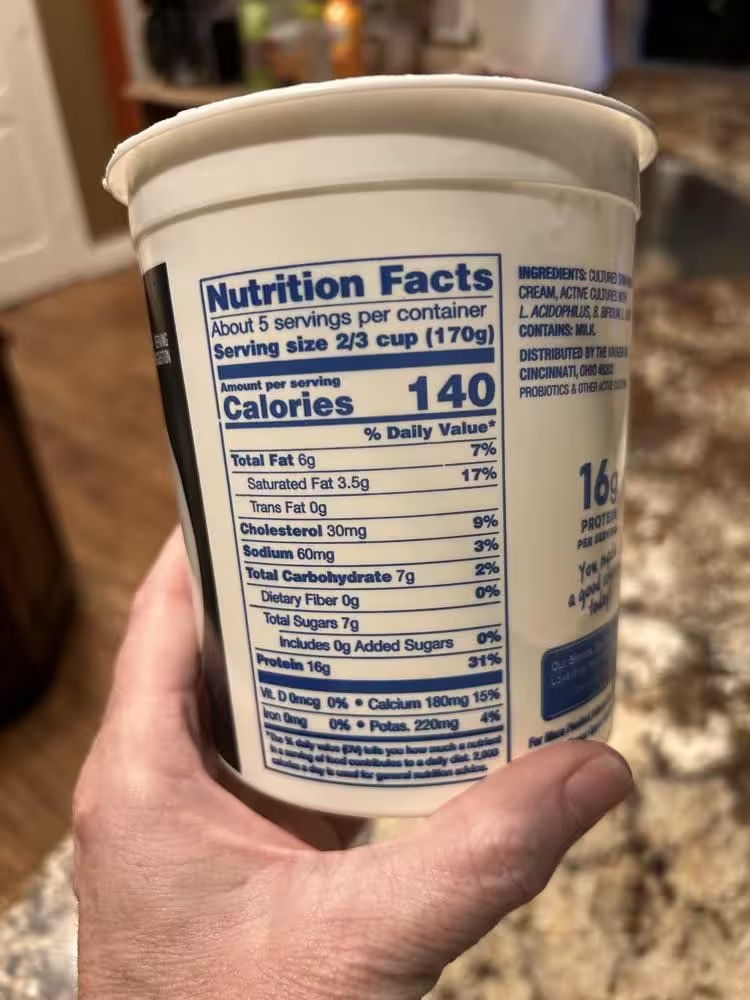
After 48 hours it is creamy, tangy, spreadable and genuinely excellent on toast, as a base for a dip or as a base for alfredo sauce. The yogurt going in carries 16 grams of protein per serving.

Why am I publishing this?
Because this stuff affects the doctor too. We are not immune.
I did not get here by being careless. I got here through an injury, an operation, a long rehab and a packed schedule, which is exactly what I hear from so many patients every week.
The difference is not that I am immune. The difference is now I know exactly what I’m made of, so I know what I am dealing with, and I can build a plan from real numbers instead of a guess.
That is the only thing I am really recommending. Find out what you are made of. Then decide what to do about it.
Frequently asked questions
What body fat percentage is considered at risk for women?
On the reference chart, at risk begins at 32 percent. Essential is 10 to 13 percent, athletes 14 to 20, fitness 21 to 24, and acceptable 25 to 31. My own result was 32.68 percent.
What is a healthy waist-to-hip ratio?
Mine is 0.82, and that is a moderately risky ratio for a range of metabolic problems. You measure your waist, measure your hips, and divide the first by the second. It costs nothing, it takes about ten seconds, and most people have never been asked for it.
How do you calculate a protein target?
From lean mass, not body weight. About one gram of protein per pound of lean mass per day for anyone without kidney disease. My lean mass is 96 pounds, so my target is 94 grams a day. If you have chronic kidney disease those targets are far more conservative and your nephrologist needs to set them.
Why is the scale not enough?
Because the scale cannot tell you what you are losing. My lean mass went up two pounds while my weight went up seven. Watching only the scale, I would have read that as a single bad number and missed the one thing worth protecting.
Can you tell your body fat percentage by looking in the mirror?
No. Mine was considerably higher than it looks on me, and I do this for a living. That is the entire reason body composition testing exists.
Dr. Lindsey M. VanDyke, DO, FACOI, FEAA, is dual board-certified in internal medicine and in endocrinology, diabetes and metabolism. She founded the Advanced Institute for Diabetes and Endocrinology in Mansfield, Texas, where new patients are typically seen within two weeks, with telehealth across seven states.
This article is educational and is not medical advice. Body composition targets, protein targets and exercise prescriptions must be set individually with your own physician.