
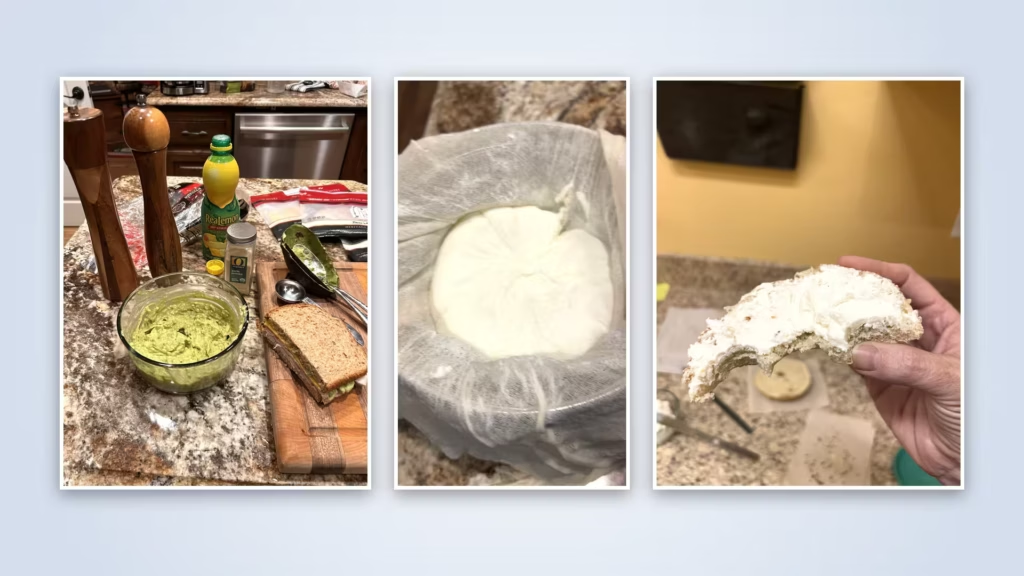
I love a good turkey sandwich.
Mayonnaise is a problem.
Not because it is evil, and not because you have to give up sandwiches. Because it is doing nothing for you nutritionally while quietly carrying most of the calories on the plate, and there is something that does the same job better.
So I swapped it. Here is what I use instead, and the second swap I have been making in my own kitchen since, along with the reason I am bothering with any of this.
Why mayonnaise is the thing I changed first
Because it is the easiest win in the whole meal, and easy wins are what actually survive a busy week.
A savoury avocado spread does the same job on the bread. It gives me more fiber. It changes bad fats to good fats. And it reduces the overall calorie load of that meal. The sandwich is the same sandwich.
That is the principle behind everything below. You do not have to eat differently. You mostly have to build the same things better.
The savoury avocado spread
Makes enough for several sandwiches. Takes about three minutes.
- 1 avocado, diced
- 1 tablespoon lemon juice
- 1/4 teaspoon salt
- 1 1/2 teaspoons garlic powder
Mash everything together until smooth.
It comes out smooth, savoury, and full of good fats and fiber. The garlic powder is what stops it tasting like plain guacamole on a sandwich, and the lemon juice keeps it from browning as fast.
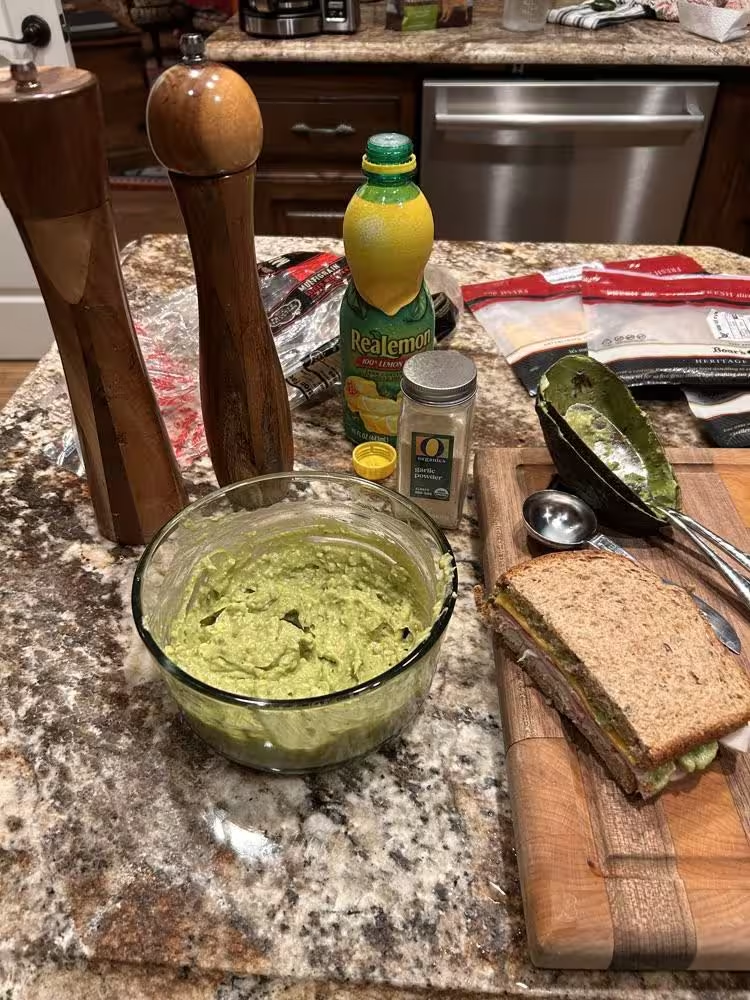
The spread, and the sandwich it is going on.
The cream cheese I make from Greek yoghurt
This one takes two days, but almost none of it is your time.
- 2 cups plain Greek yoghurt
- 1 tablespoon lemon juice
- 1 teaspoon salt
Mix the ingredients. Pour into a sieve lined with cheesecloth. Tie the cheesecloth tightly. Set the sieve over a bowl and place it in the fridge for 48 hours. You can weigh the cheesecloth bundle down with another bowl or a can to help express the liquid.
After 48 hours it is perfectly creamy, tangy, spreadable and excellent on a bagel or a sandwich.
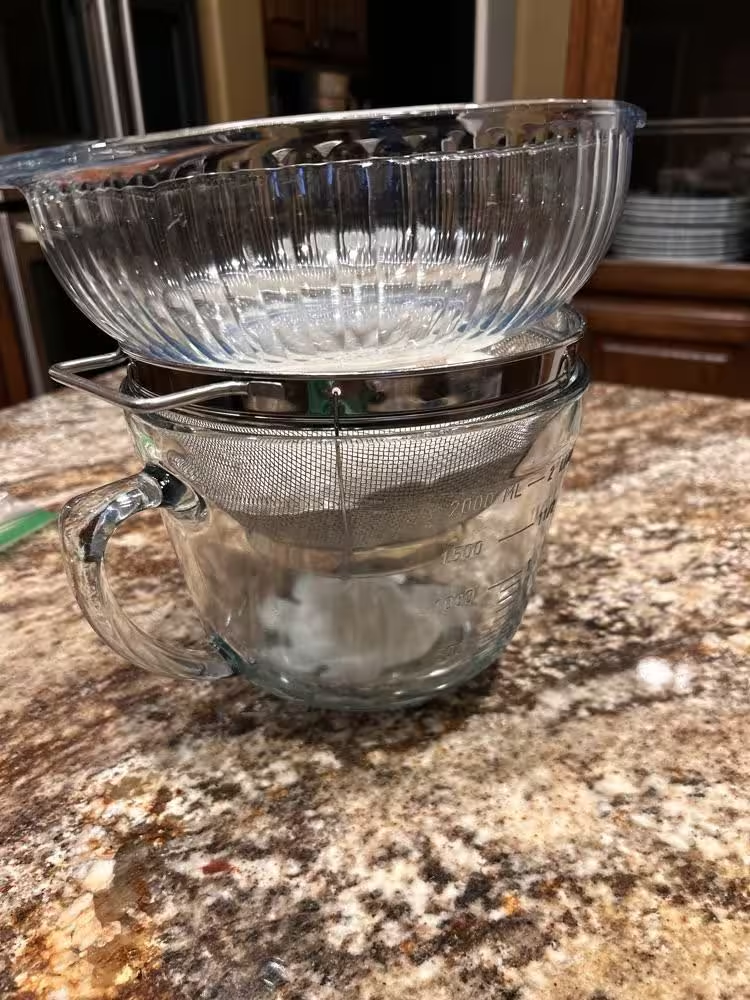
Sieve, cheesecloth, bowl underneath.
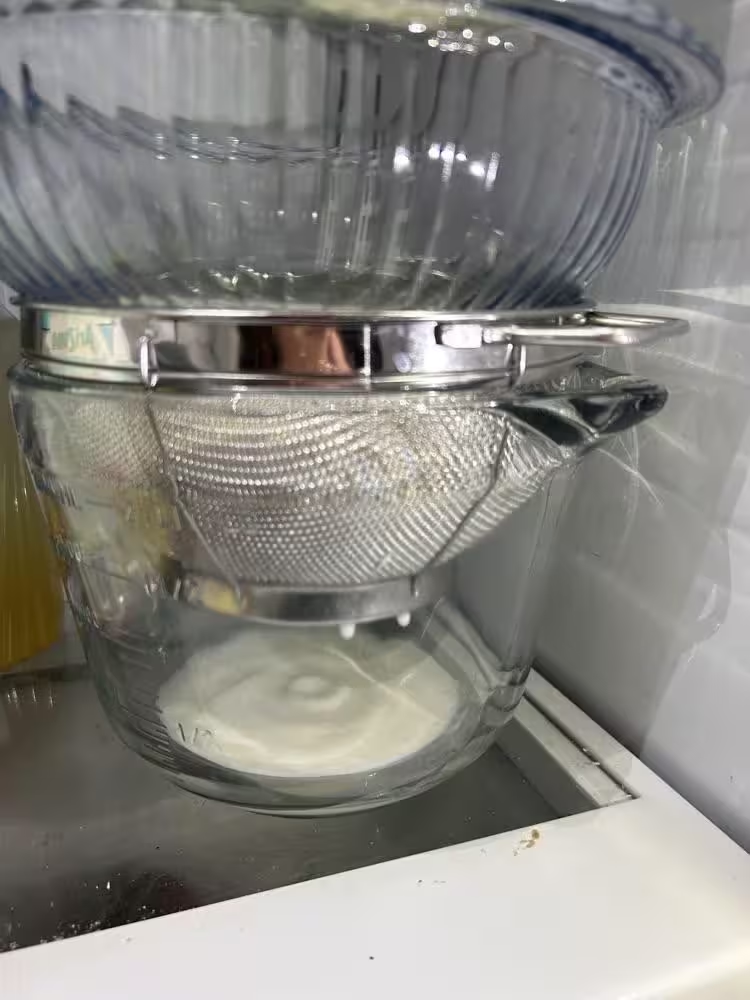
Into the fridge for 48 hours.
What you are actually getting out of it
This is the part that made me start doing it.
Plain Greek yoghurt carries 16 grams of protein per two-thirds cup serving, at 140 calories, with 7 grams of carbohydrate and no added sugars. Two cups is about three servings, so roughly 48 grams of protein goes into the batch before you strain anything.
Straining removes whey, which is liquid, so what is left is thicker and denser in protein per gram than what you started with. I have not weighed the finished batch, so I am not going to quote you a number I have not measured.
Compare that to what it is replacing, which contributes essentially no protein at all.
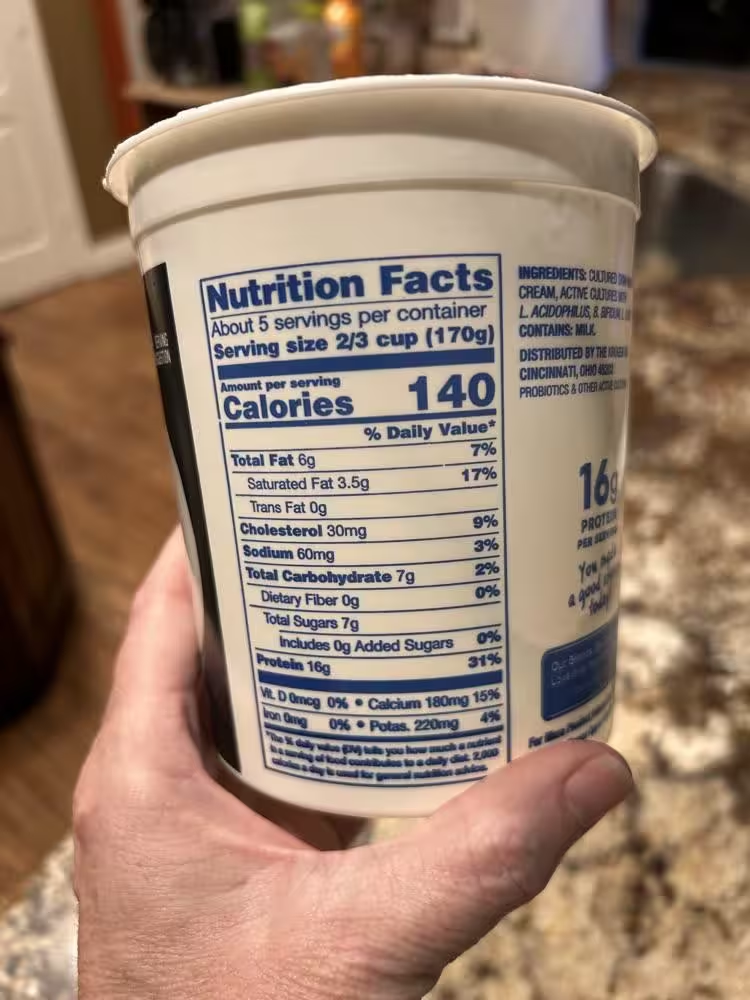
What goes in.

What comes out.
Why I am making my own food at all
Because I ran a body composition test on myself in July and did not like what came back.
142 pounds. 96 pounds of lean mass. 32.68 percent body fat, which on the reference chart for women is the at risk category. Eleven of those pounds are excess fat.
The plan those numbers produced gives me a calorie target of 1,500 a day and a protein goal of 94 grams. Ninety-four grams is hard to hit. It does not happen by accident, and it certainly does not happen if the spread on your sandwich is contributing calories and no protein.
So I am taking more responsibility for shopping for and making my own food, specifically so I can swap the things that matter. These two swaps are where I started.
EMBED THE VIDEO HERE: https://www.youtube.com/watch?v=eMax3mzhzJA The full story of the body composition test and the eight week plan. 7:05.
The wider point about swaps
Restriction fails because it asks you to want less. Swaps work because they ask you to want the same thing, built better.
Nobody sustains a plan that removes the turkey sandwich. Plenty of people sustain a plan where the sandwich stays and the spread changes.
If you are on a GLP-1 and your appetite has dropped, this matters more, not less. When you are eating less food overall, every single thing on the plate has to work harder for you nutritionally. A spread that carries protein instead of one that carries nothing is not a small difference at that point.
Frequently asked questions
Mark up as FAQPage. Keep it alongside the Recipe schema rather than instead of it.
What is a healthy substitute for mayonnaise?
A savoury avocado spread. One diced avocado, a tablespoon of lemon juice, a quarter teaspoon of salt and a teaspoon and a half of garlic powder, mashed smooth. It gives you more fibre, replaces the fats with better ones, and lowers the calorie load of the meal without changing the sandwich.
How do you make cream cheese from Greek yoghurt?
Mix two cups of plain Greek yoghurt with a tablespoon of lemon juice and a teaspoon of salt. Pour it into a cheesecloth-lined sieve, tie the cheesecloth tightly, set the sieve over a bowl and refrigerate for 48 hours. Weighing the bundle down helps express the liquid.
Is Greek yoghurt cream cheese higher in protein than regular cream cheese?
Yes, substantially. Plain Greek yoghurt carries about 16 grams of protein per two-thirds cup serving, so a two cup batch starts with roughly 48 grams before straining. Regular cream cheese contributes very little protein.
How long does the avocado spread keep?
It is best the day you make it. The lemon juice slows browning but does not stop it, so make small batches rather than trying to store it for the week.
Do swaps like this actually matter for weight loss?
They matter most when you are eating less overall, which is exactly the situation on appetite suppressing medication. When total intake drops, every item on the plate has to work harder nutritionally, and a spread that carries protein rather than one that carries none is a meaningful difference.
Dr. Lindsey M. VanDyke, DO, FACOI, FEAA, is dual board-certified in internal medicine and in endocrinology, diabetes and metabolism. She founded the Advanced Institute for Diabetes and Endocrinology in Mansfield, Texas, where new patients are typically seen within two weeks, with telehealth across seven states.
This article is educational and is not medical advice. Nutrition targets must be set individually with your own physician, particularly if you have kidney disease or any chronic condition.