And Why That’s Actually Better for Your Outcomes
“Why don’t you take insurance for weight loss?”
It’s a fair question—and an important one. Many people assume that if insurance doesn’t cover something, it must be optional or unnecessary.
But in weight management, the opposite is often true.
The insurance model isn’t built to support the kind of comprehensive care that actually changes long-term outcomes. Once you understand how the system works, the rationale becomes clear.
The Insurance Industry Is Interventional, Not Preventive
The current insurance model is designed to address acute problems—not prevent them.
Effective weight management requires:
- Ongoing coaching
- Lifestyle modification
- Dietary guidance
- Frequent follow-up
These are the interventions that drive real results—and they are rarely covered.
In many cases, even accessing a dietitian through insurance can be difficult without a formal diabetes diagnosis. Patients who are pre-diabetic or metabolically at risk often don’t qualify for support until the condition progresses.
This creates a system where intervention comes late—after complications develop—rather than early, when outcomes can still be significantly improved.
What Happens When Weight Loss Gets Oversimplified
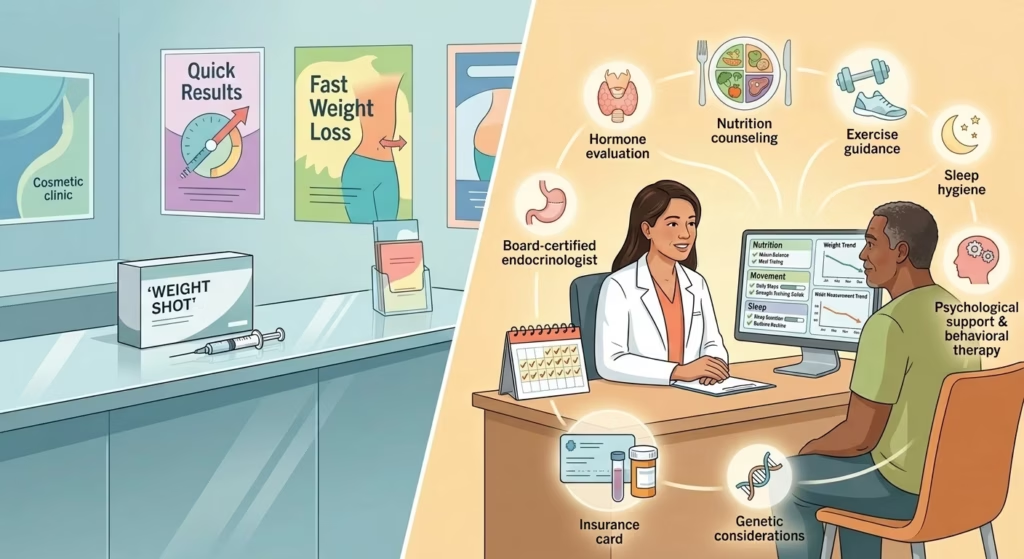
Weight loss has increasingly been reduced to quick-access solutions: injections, supplements, or “hormone optimization” services offered outside of traditional medical frameworks.
While medications such as GLP-1 receptor agonists (e.g., semaglutide, tirzepatide) can be effective tools, they are not complete solutions.
Medication alone does not address:
- Dietary patterns
- Lifestyle behaviors
- Psychological drivers
- Hormonal imbalances
- Underlying endocrine conditions
Access to medication is not the same as comprehensive care.
What Comprehensive Weight Management Actually Looks Like
At AIDENDO, weight management is approached as a multifactorial chronic disease requiring structured, individualized care.
Our program evaluates and addresses all relevant contributors:
- Endocrine factors: thyroid dysfunction, PCOS, insulin resistance, Cushing’s syndrome
- Nutrition: evidence-based dietary patterns tailored to metabolic health
- Lifestyle: exercise, sleep, and stress management
- Behavioral health: psychological and habit-based drivers
- Genetics: investigation of underlying predispositions when indicated
- Medication: when appropriate, prescribed and managed by an endocrinologist
- Surgical pathways: coordinated care with bariatric specialists if needed
This is not a one-size-fits-all model—it’s a structured, medically supervised process designed for sustainable outcomes.
This Isn’t a One-and-Done Visit
Early in the program, patients are typically seen every two weeks. This allows for:
- Adjustment to new routines
- Monitoring of progress
- Rapid response to challenges
- Ongoing accountability
As progress stabilizes, visit intervals extend—but continuity of care remains.
This level of follow-up is a key driver of success—and it’s not something insurance typically supports.
Why an Endocrinologist, Not a Med Spa
Obesity is a complex endocrine condition involving hormones, metabolism, and chronic disease pathways.
A board-certified endocrinologist is trained to:
- Identify root causes of weight gain
- Manage medications safely within the broader health context
- Develop comprehensive, individualized treatment plans
Additionally, AIDENDO provides integrated access to:
- Laboratory services
- Dietitians
- Nephrology
- Wound care
- Bariatric surgery
This centralized model eliminates fragmentation and simplifies care delivery.
An Investment in Your Future
This model represents a financial investment:
- Initial consultation: $400 (60 minutes)
- Follow-up visits: $275 (45 minutes)
Insurance continues to cover:
- Laboratory testing
- Imaging
- Medications
- Medical devices
- Orders and referrals
Patients also receive documentation (superbill) for potential reimbursement submission.
Compared to a low copay visit, the question becomes one of value: does a brief, limited interaction provide the depth required to produce meaningful change?
Incomplete care often carries a higher long-term cost.
The Bottom Line
Insurance does not typically cover the components of care that drive lasting weight loss outcomes—comprehensive evaluation, behavioral support, and consistent follow-up.
By operating outside those constraints, we are able to deliver a model of care that prioritizes depth, continuity, and measurable results.
For patients prepared to engage in that process, the difference is significant.
Ready to Take a Different Approach?
Now seeing patients in 7 states via telehealth: TX | CA | CO | OR | WA | OK | NM
Get your consultation in weeks—not months.
📞 469-THYROID (469-849-7643)
📞 817-380-4880
🌐 aidendo.com