
Smoothies: Healthy Choice or Sugar Trap?
Smoothies have a health halo. They’re marketed as clean, nutritious, even “detoxifying.” And for a lot of people, they’ve replaced cereal as the default breakfast. But here’s the truth: some smoothies are legitimately great for your metabolic health—and others are basically candy in a cup.
The difference comes down to what’s actually in them. And if you’re managing diabetes or pre-diabetes, this distinction matters more than you might think.
First, Let’s Kill the “Detox” Myth
Before we talk about building a better smoothie, there’s something important to address: there is no scientific evidence that any smoothie, cleanse, or juicing diet actually “detoxes” your body.
That is what your liver does—24 hours a day, 7 days a week, 365 days a year. If your liver is healthy, it is constantly breaking things down and detoxifying your system. No blended kale is going to do that job better than the organ designed for it.
So when you see “detox smoothie” on a menu or a label, what you’re really looking at is marketing. Evaluate the smoothie based on what’s in it—not what the label claims it does.
The Problem Smoothie
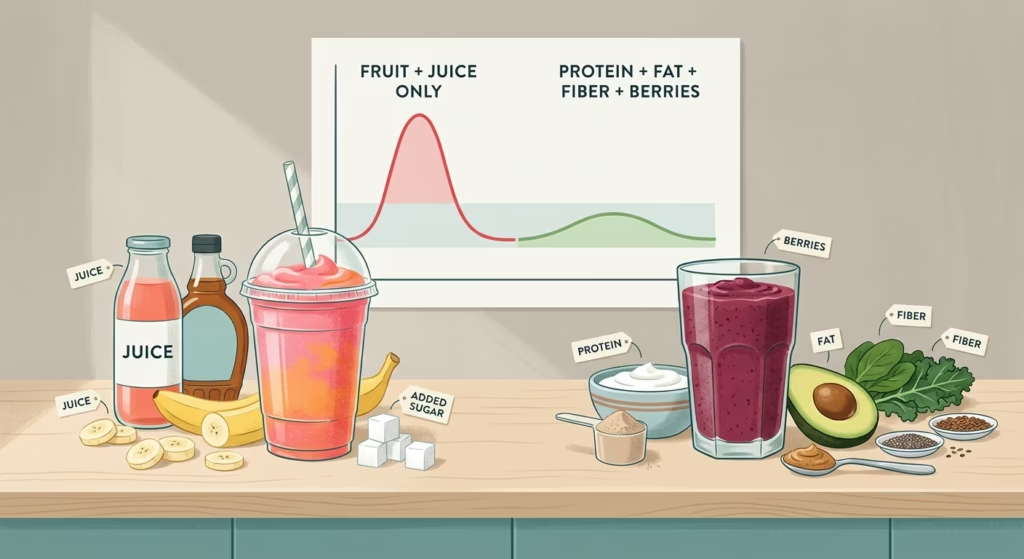
A lot of popular smoothies—both store-bought and homemade—are essentially fruit and juice blended together. That’s it. No protein. No fat. No meaningful fiber. Just a concentrated load of sugar hitting your bloodstream with nothing to slow it down.
Fruit juice in a blender is still fruit juice. Your CGM doesn’t care what cup it came in.
This is the same issue we see with cereal: something marketed as healthy that functions as a fast-acting carbohydrate delivery system. Your glucose monitor will spike quickly.
Large companies profit from smoothies that look healthy but are metabolically similar to soda—just with better branding. Knowing the difference matters.
How to Build a Smoothie That Actually Works
A good smoothie isn’t complicated—but it does require the right balance of macronutrients to slow carbohydrate absorption and stabilize blood sugar.
1. Start With Protein
Protein is the foundation. Aim for 25–30 grams per smoothie. Sources include Greek yogurt, a quality protein powder, or both.
- Slows gastric emptying
- Reduces glucose spikes
- Improves satiety
Without protein, you’re essentially drinking flavored sugar.
2. Add a Fat Source
Fat is often missing from “healthy” smoothies, but it’s critical for slowing carbohydrate absorption.
- Avocado (creaminess + monounsaturated fats)
- Nut butter (almond, peanut, cashew)
- Hemp seeds
- Chia seeds
3. Choose Your Fruit Wisely
Fruit belongs in smoothies—but with two key rules:
- Use whole fruit, never juice
- Choose lower glycemic options when possible
Better options: blueberries, blackberries, raspberries, strawberries
Less optimal options: bananas and citrus fruits (higher sugar, lower fiber buffering)
Your glucose monitor will show you how different fruits affect your body—use that feedback.
4. Boost the Fiber
Fiber transforms a decent smoothie into a metabolically effective one.
- Ground flaxseed
- Psyllium husk
- Spinach or kale (you won’t taste it once blended)
This is also one of the easiest ways to increase your intake of leafy greens.
5. Extra Credit: Add Turmeric
Add ½ teaspoon of turmeric for additional benefit. Its active compound, curcumin, has anti-inflammatory properties that may support long-term metabolic health—especially relevant for individuals with pre-diabetes or diabetes.
The Blood Sugar–Friendly Smoothie Formula
- Protein: 25–30g (Greek yogurt, protein powder, or both)
- Fat: avocado, nut butter, or seeds
- Fruit: whole berries preferred; avoid juice
- Fiber: flaxseed, psyllium husk, or leafy greens
- Bonus: ½ tsp turmeric
This combination creates a slow, steady glucose response instead of a spike-and-crash pattern. Each component serves a purpose: protein and fat slow absorption, fiber buffers glucose, and fruit provides nutrients without excessive sugar load.
Upgrade your smoothie, and your glucose response will reflect it.
Red Flags in Store-Bought Smoothies
When evaluating pre-made smoothies or protein shakes, apply these criteria:
- Protein: At least 15g
- Sugar: Ideally under 10–12g per serving
- First ingredient: Avoid juice, syrup, or added sweeteners
- Fiber: Minimum 3g (more is better)
- Protein-to-carb ratio: Aim for roughly 1:1
Many commercial smoothies fail these checks—they’re often juice concentrates with minimal protein and a misleading “healthy” label.
Ready for Comprehensive, Root-Cause Care?
Now seeing patients in 7 states via telehealth: TX | CA | CO | OR | WA | OK | NM
Get your consultation in weeks—not months.
📞 469-THYROID (469-849-7643)
📞 817-380-4880
🌐 aidendo.com